With graduation from SDSU looming on the horizon less than six months away, there’s a lot on my mind as to what comes next. In the short term, rejoining the workforce with a shiny new bachelor’s degree in hand and finding a way to pursue a master’s degree. In the long term, an uncertainty that’s been slowly chipped away by introspective rumination on my present and past circumstances.
The existential pressures of age started to rear their heads years ago when I decided to return to college at the end of 2019. That “new year, new decade, new me” aspiration was a hopeful attempt at reorienting myself in life, to move on from the addled wreck stuck in past traumas and struggling with depression & anxiety; to rediscover my “true” self. Along the way, what were random single white hairs on the side of my head back then have now become a noticeable salt-and-pepper mix on my scalp and beard. I’ve already long carried an acute awareness of my biological age and a sense of having to “catch up” to it, most of my peers having earned their college degrees long ago. Seeing it increasingly reflected in the mirror each day only made the distance to the associate’s degree graduation finish line all the more agonizing.
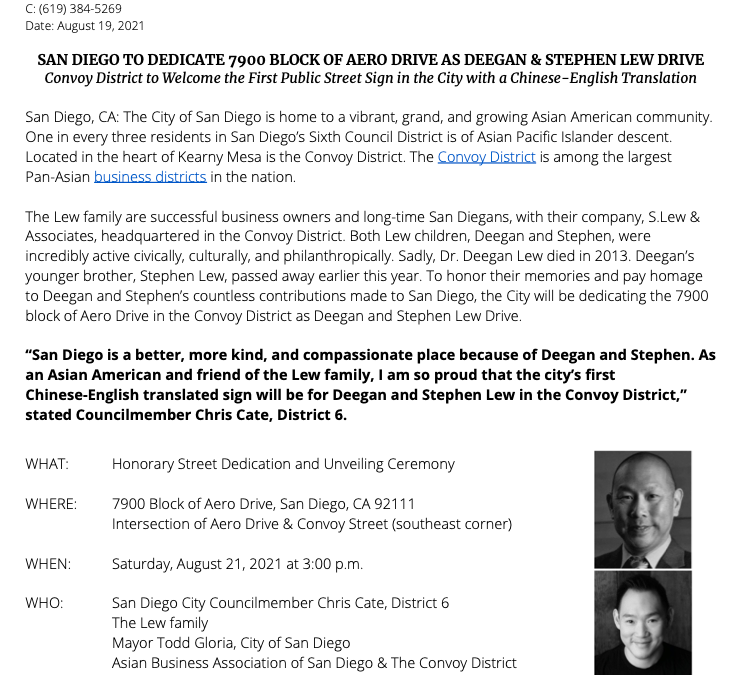
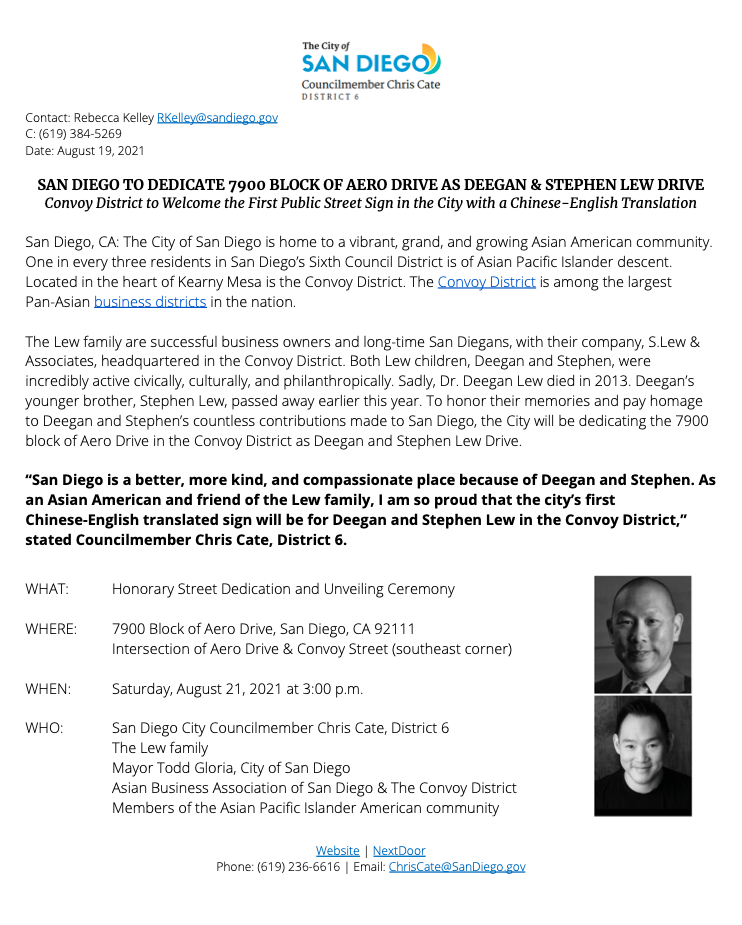
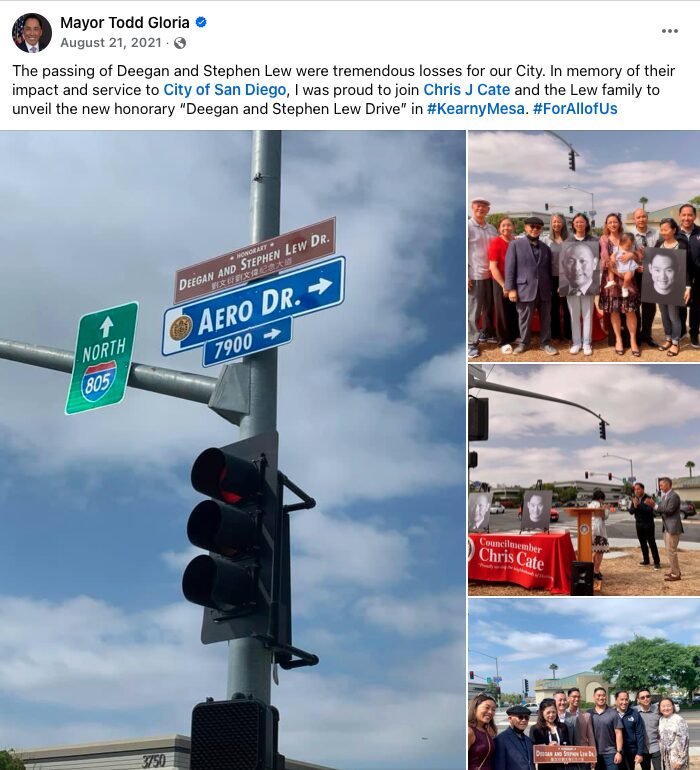
Those pressures were further aggravated by the sudden death of my cousin Stephen in 2021 at the age of 43, which I only found out about months after the fact by way of Facebook. Following his passing, a part of Aero Drive was honorarily named after him and his brother Deegan (whom had passed away back in 2013, aged 47) for their service to the City of San Diego, bringing the city its first street sign with Chinese writing. And I was left as the last surviving male heir to my grandfather’s name and bloodline, the mixed Mexican grandson he and my grandmother never wanted. This heavily influenced my decisions to apply to SDSU and subsequently enroll after admission was offered.
Cousin Deegan was 20 years older than me, and I only remember seeing him once upon a 1994—he was visiting town on holiday from school out of state, overlapping during one of my extended stays with my dad. We went to go see the Street Fighter movie in the theater, then stopped at the adjoining arcade to play the namesake game and a few others. I remember him being very kind and patient, encouraging my curiosity and engaging with my kid self’s eagerness to show off everything I knew. That night, in him I saw what I hoped my future self would be like once I grew up. Cousin Steven was only 8 years older than me, and despite being local to San Diego, I still only ever saw him a handful of times, mostly at family functions. Due to the age difference, we didn’t really interact much; he was always too preoccupied charismatically engaging with all the other adults present. Their topics of conversation usually went above my head, especially when use of the Chinese language was involved.
Thanks to the shrewd business acumen and accomplishments of my Aunt Susan in local government, they were setup for success. They got to grow up in a large two-story house in the upper-middle class neighborhood of Tierrasanta, attend university at UCSD without concern of affordability, and had inroads to local politics. Meanwhile, I grew up in low income neighborhoods in San Diego. I even have early memories of a period of being unhoused, staying at shelter with my mother an older sister who still lived at home. Halfway through elementary school was when my mother bought her house on the other side of the U.S.-Mexico border, the start of early 5 AM rises that regularly ended in being late to first period class, sometimes missing it entirely.
Growing up, I’d always known that my paternal grandparents had not wanted me. The story of how they took my dad off to China to get married when they learned I had been conceived was something my mother told me repeatedly as soon as I learned to speak. It also wasn’t lost on me during stays with my dad, who always lived with them, pictures of me never joined those of Deegan, Stephen, or my aunts and uncles hanging on the walls. During those stays, my grandparents didn’t ever speak to me. Somewhere along the way, I formed the assumption that it was largely the result of a language barrier like the one with my maternal grandparents that only spoke Spanish, one that lasted until only a few years ago.
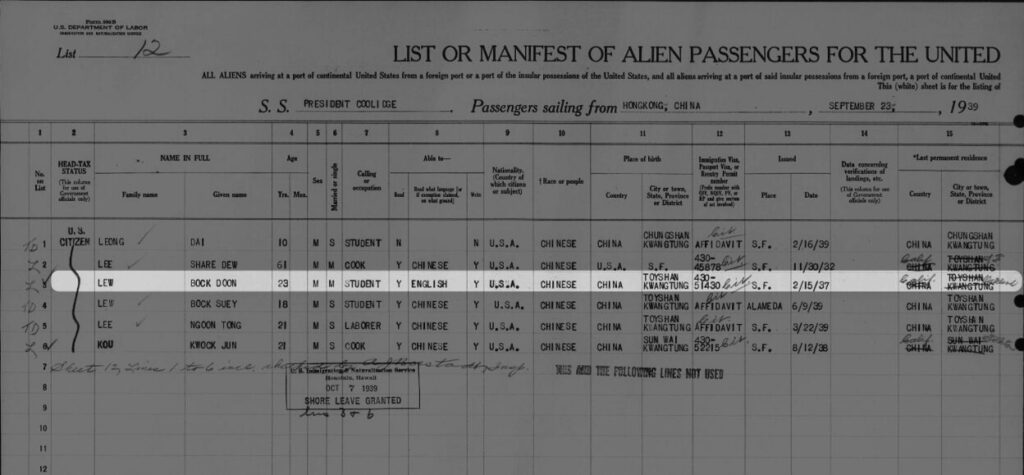
I recently received an email notification for my abandoned ancestry.com account announcing new “hints” available for my grandfather. I opened them to find naturalization records and passenger lists of my grandfather’s adolescent immigration with my great-grandfather, and his name on a roster of graduates from a Bay Area high school. It was then that the realization that my grandfather had been a fluent English speaker the whole time really sunk in, that all those times I attempted to spend time around him and left in silence remained an intentional choice all throughout my life.
I can’t say that realization had any hurtful impact, all it did was further affirm what I’d known all along. However, it has proven to be highly motivational. This upcoming year, I’ll be graduating SDSU and entering my 40s, the same decade that claimed both of my paternal cousins; each new day can no longer be taken for granted. Not only that, but middle age will only be a short decade away. This leaves precious little time to find a way to meet the bar set by my elder cousins, and make my own notable contributions and service to my home city of San Diego.
A rumination that’s crossed my mind multiple times this year has been the first stories that made me: my favorite books as a child, and just how deep their influence ended up running.
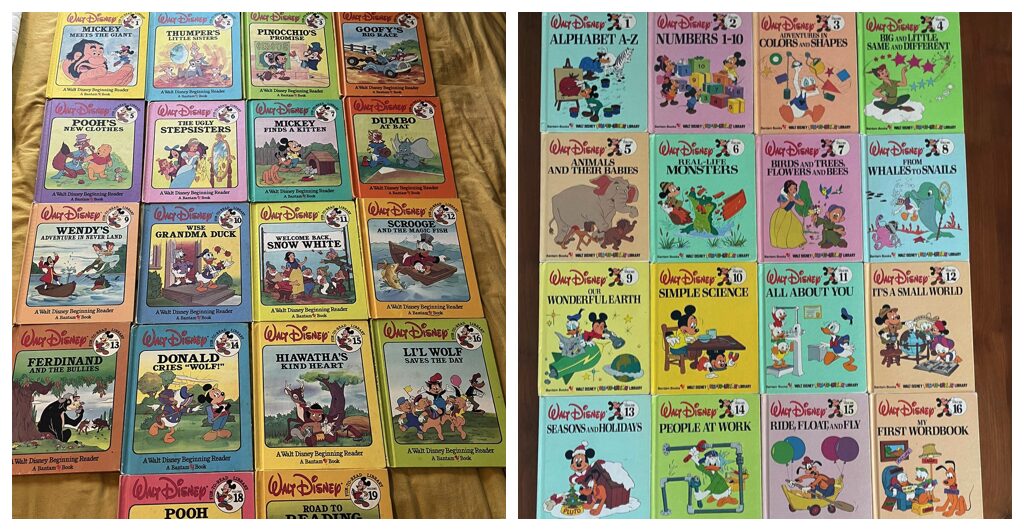
I started reading before grade school. I’d had exposure to reading basics in pre-school, and more importantly, strong supplemental at-home efforts by an elder sister. It was through her guidance that I was taught to read out of my collection of Walt Disney Fun-to-Read Library books. These beginning reader books were fascinating to me, stories featuring my beloved Disney characters that couldn’t be found in their TV cartoons or movies. And In book form, they weren’t just entertaining me, they were providing instruction and making a good case for its usefulness in life.
Some were original stories expanding beyond what happened in the movie, such as The Ugly Stepsisters Cinderella story. But many of them were adaptations of classic stories and fables like “The Tortoise and the Hare” (Goofy’s Big Race) and “The Boy Who Cried Wolf” (Donald Cries “Wolf!”). Between that set and the encyclopedic Fun-to-Learn library, those Disney books were my constant companions in the lulls of childhood before portable electronic devices. They taught me to be curious about the world and appreciate it for what it is. I feel rather guilty for having forgotten them altogether in the time since, and only just remembering them now as I started to write this.
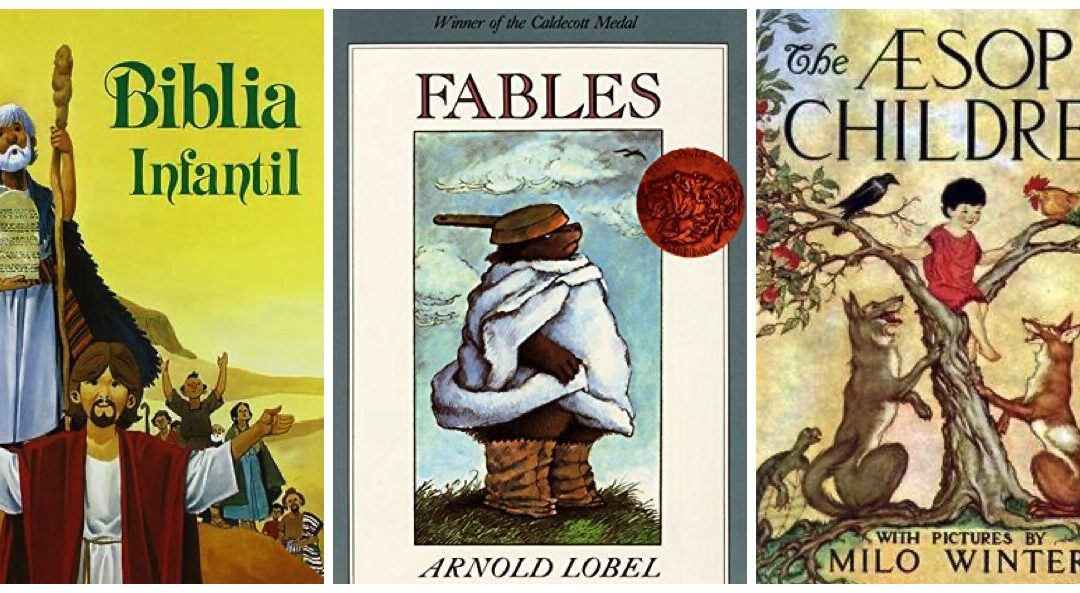
The books I’ve held in memory as my favorites from back then are the ones I read after starting elementary school—Arnold Lobel’s Fables, which ended up steering me to The Aesop for Children. Those were incredible, it was like finding the unfiltered originals that the Disney cover versions I had loved so much when starting to learn to read were based on. And since they weren’t interpretations featuring licensed characters, those stories could be more explicit about real consequences, including punishment or even death. They spoke of the world without glossing over reality and sanitizing it like most other children’s books did. By similar reasoning, so too did my Spanish children’s illustrated bible become the other book in my personal collection I reread the most. It had all the stories that would be referenced at weekend church services, but much more direct and to the point and with better illustrations than those in stained glass windows.
Despite my deep fondness for my bible, even as early as the age of 6 I knew that I was not a believer of the Catholic faith. There were too many inconsistencies that my kid self couldn’t reconcile: the lack of any mention of dinosaurs, the story of the Tower of Babel only being able to account for different languages but not global geographic distribution or different religions altogether, the list goes on. The bible was just another book of ancient fables, ones that featured people as the main characters instead of nature. Where Aesop’s stories had the fantastical elements of high-thinking and talking animals, the bible had the magic of divine providence: an enchanted bottomless jar of oil, feeding thousands of people with five loaves of bread and two fish, walking on water, resurrection and ascension…sensationalized fictional parables that violated the natural order that were not supposed to be taken literally.
Yet for all my lack of genuine belief, I still fostered a strong agreement with the morals of biblical scripture and religious works: the baselines of human conduct set forth by the Ten Commandments, the character degrading dangers of the seven deadly sins, the utmost heinousness of betrayal exemplified by Judas Iscariot, the obligation to respect and care for the natural world that is (allegedly) God’s creation. And most saliently, the Golden Rule–do unto others as you would have them do unto you.
It was also readily apparent to me at a young age that everyone around me who professed unwavering belief in biblical teachings were also the ones who most freely practiced those minor forms of wickedness in their daily lives. Gossip, judgment, in-fighting were all a regular part of the family dynamic, both immediate and extended, as well as among the members of the local church community. The gluttony of alcoholism unquestioned, men always throwing back beer after beer without moderation in the presence of children at parties, even those hosted in the event hall on the church grounds. As the list of noted disparities grew larger, so it was that I began to see adults in my world primarily as examples of what not to do, including even my own parents. From those observations came the resolve to be a better adherent of Christ’s teachings as a non-believing agnostic secular humanist than the hypocrites in the pews.
Collectively, these Disney starter books, ancient Greek philosophical tales, and Spanish kid’s bible set me up to be the goody-goody kid I used to be, and the resolute adult that came after.
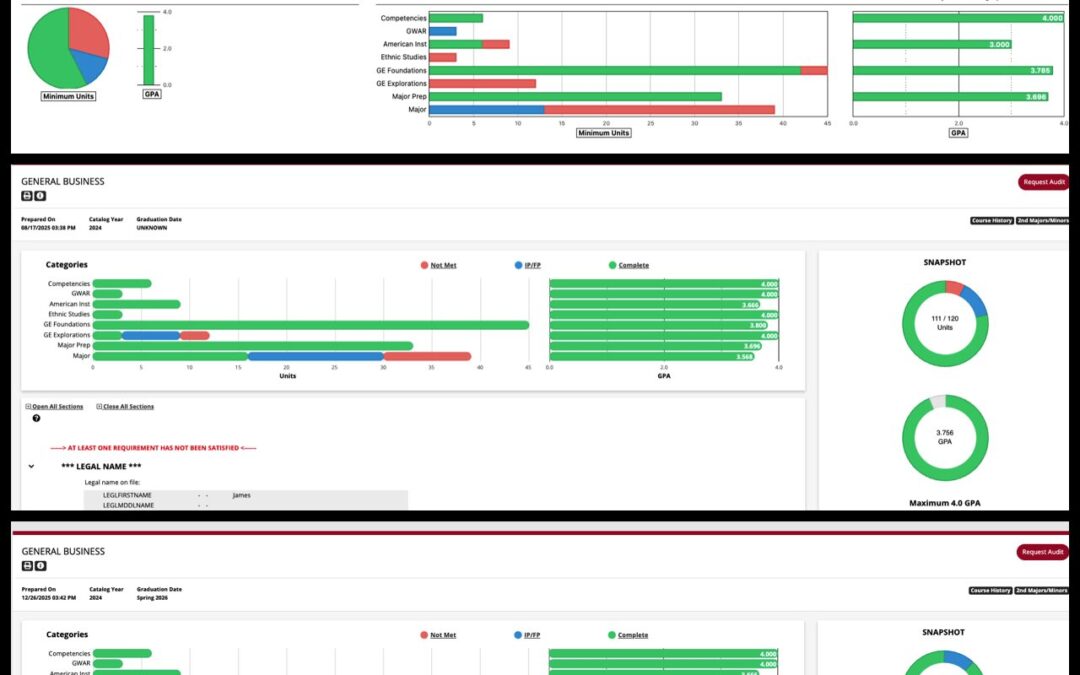
From being a fresh transfer student at the beginning of the year to now coming up on my final semester. Eleven demanding months of academic rigor, 16 units over the regular semester and 10 over the summer session, now fully reflected in my degree audit. To have gotten this much completed while simultaneously self-representing in civil process and appellate proceedings has given me a massive boost in confidence over my own capabilities.
I finished at San Diego City College in the summer of 2024, and walked at the next commencement in the spring of 2025 after my first semester at SDSU. Now, in less than 6 months, I’ll be in another graduation ceremony at the university level from San Diego State; back-to-back graduation years.
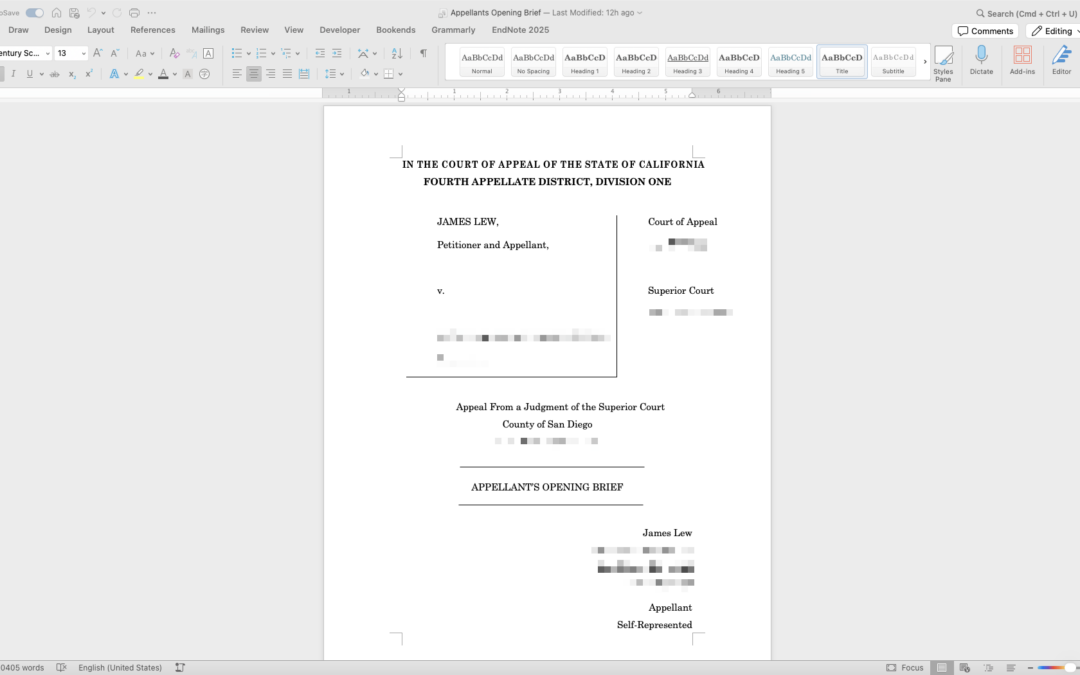
While this year has been spent prioritizing my academic obligations as an SDSU student, all the while I’ve also been following up on the court case against my harasser. Moving the case to the appellate court took so long that it ended up being the Fall final exams that it conflicted with. Nonetheless, I was able to get my appellant’s opening brief completed and submitted (thanks to the extensions granted) last Friday, my ungraded no-credit 4-6 unit equivalent magnum opus this year. It was filed by the reviewing court a couple days ago. And today, I finished and submitted those other administrative follow up items identified earlier in the year.
Now all that’s left is to wait while this all plays out over the coming months while I finish my final semester and graduate SDSU; there won’t be anything else major for me to write/submit/file at this point. Hopefully this all resolves in my favor as it should have from the start. Regardless of the outcome, I look forward to the procedural aspects of this reaching their conclusion so I can move onto opening a can of First Amendment all over these matters and fully tell this story once I’m no longer preoccupied with university student life.
I did it. All final exams and presentations done. Opening appellant’s brief finished and filed. Final “group” written report that I ended up self-writing to about 13 pages of copy, 25 pages total with cover page/table of contents/appendices, riding the momentum from all that legal brief preparation.
What I feel most is accomplished. Dealing with full-time academic course loads all year while also self-representing a case through the appeal process has felt like running two mental marathons at the same time for 11 months straight. So much pressure and stress, all kinds of mental and emotional duress, all powered through to bring me to this moment in time when I can look back on them instead of having to actively live them.
Relatedly, the other major feeling I’m having is one of cathartic relief, like I finally have room to start being the “real” me again, not that myopically-focused forced stoic facade privately brimming with resentment and anxiety. I physically feel like magically I lost 15 lbs overnight, and my full capacity for a gratitude mindset has returned.
At this point, both matters are no longer future unknowns, they are now mostly-done. As the year winds down and the upcoming personal decade milestone of 2026 gets ever closer, I’m feeling confident and capable in driving my undergraduate studies and appeal case to their conclusion.