A rumination that’s crossed my mind multiple times this year has been the first stories that made me: my favorite books as a child, and just how deep their influence ended up running.
I started reading before grade school. I’d had exposure to reading basics in pre-school, and more importantly, strong supplemental at-home efforts by an elder sister. It was through her guidance that I was taught to read out of my collection of Walt Disney Fun-to-Read Library books. These beginning reader books were fascinating to me, stories featuring my beloved Disney characters that couldn’t be found in their TV cartoons or movies. And In book form, they weren’t just entertaining me, they were providing instruction and making a good case for its usefulness in life.
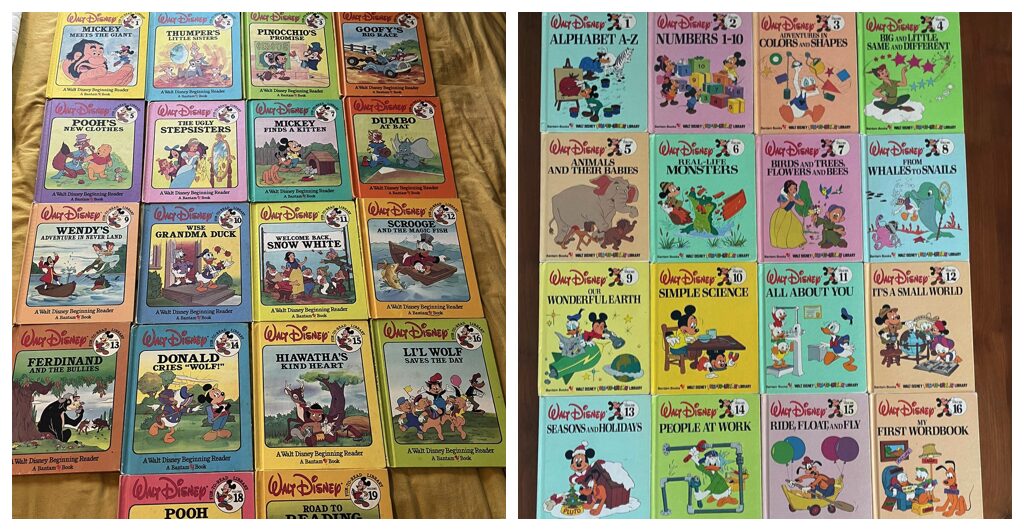
Some were original stories expanding beyond what happened in the movie, such as The Ugly Stepsisters Cinderella story. But many of them were adaptations of classic stories and fables like “The Tortoise and the Hare” (Goofy’s Big Race) and “The Boy Who Cried Wolf” (Donald Cries “Wolf!”). Between that set and the encyclopedic Fun-to-Learn library, those Disney books were my constant companions in the lulls of childhood before portable electronic devices. They taught me to be curious about the world and appreciate it for what it is. I feel rather guilty for having forgotten them altogether in the time since, and only just remembering them now as I started to write this.
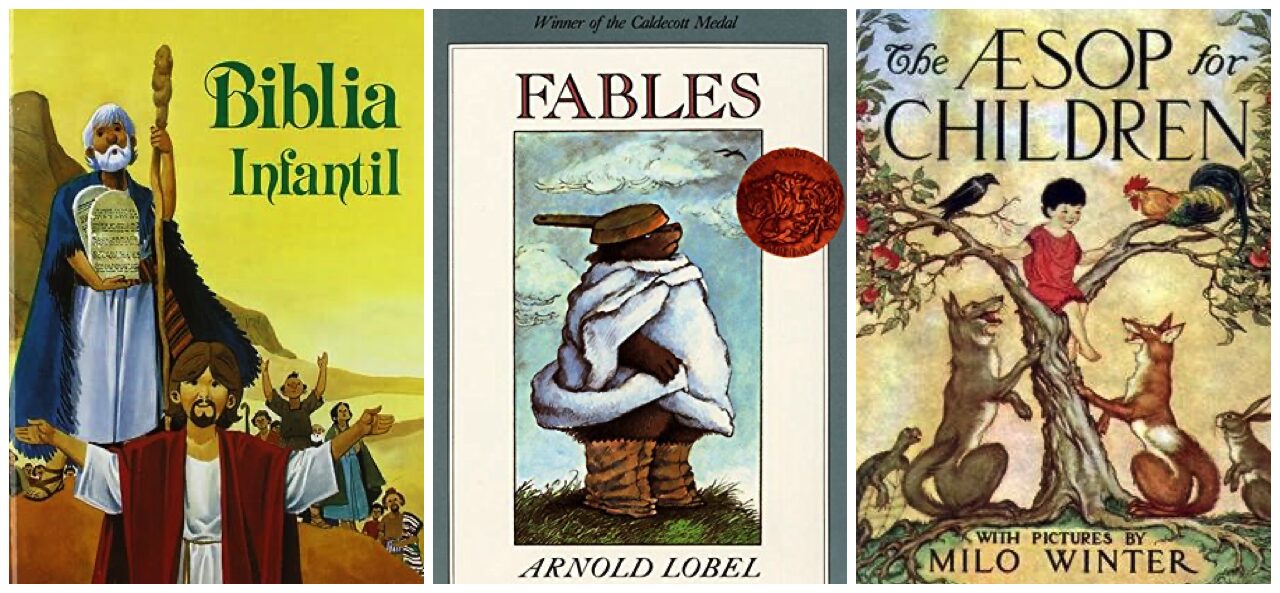
The books I’ve held in memory as my favorites from back then are the ones I read after starting elementary school—Arnold Lobel’s Fables, which ended up steering me to The Aesop for Children. Those were incredible, it was like finding the unfiltered originals that the Disney cover versions I had loved so much when starting to learn to read were based on. And since they weren’t interpretations featuring licensed characters, those stories could be more explicit about real consequences, including punishment or even death. They spoke of the world without glossing over reality and sanitizing it like most other children’s books did. By similar reasoning, so too did my Spanish children’s illustrated bible become the other book in my personal collection I reread the most. It had all the stories that would be referenced at weekend church services, but much more direct and to the point and with better illustrations than those in stained glass windows.
Despite my deep fondness for my bible, even as early as the age of 6 I knew that I was not a believer of the Catholic faith. There were too many inconsistencies that my kid self couldn’t reconcile: the lack of any mention of dinosaurs, the story of the Tower of Babel only being able to account for different languages but not global geographic distribution or different religions altogether, the list goes on. The bible was just another book of ancient fables, ones that featured people as the main characters instead of nature. Where Aesop’s stories had the fantastical elements of high-thinking and talking animals, the bible had the magic of divine providence: an enchanted bottomless jar of oil, feeding thousands of people with five loaves of bread and two fish, walking on water, resurrection and ascension…sensationalized fictional parables that violated the natural order that were not supposed to be taken literally.
Yet for all my lack of genuine belief, I still fostered a strong agreement with the morals of biblical scripture and religious works: the baselines of human conduct set forth by the Ten Commandments, the character degrading dangers of the seven deadly sins, the utmost heinousness of betrayal exemplified by Judas Iscariot, the obligation to respect and care for the natural world that is (allegedly) God’s creation. And most saliently, the Golden Rule–do unto others as you would have them do unto you.
It was also readily apparent to me at a young age that everyone around me who professed unwavering belief in biblical teachings were also the ones who most freely practiced those minor forms of wickedness in their daily lives. Gossip, judgment, in-fighting were all a regular part of the family dynamic, both immediate and extended, as well as among the members of the local church community. The gluttony of alcoholism unquestioned, men always throwing back beer after beer without moderation in the presence of children at parties, even those hosted in the event hall on the church grounds. As the list of noted disparities grew larger, so it was that I began to see adults in my world primarily as examples of what not to do, including even my own parents. From those observations came the resolve to be a better adherent of Christ’s teachings as a non-believing agnostic secular humanist than the hypocrites in the pews.
Collectively, these Disney starter books, ancient Greek philosophical tales, and Spanish kid’s bible set me up to be the goody-goody kid I used to be, and the resolute adult that came after.